What Is Setsubun?
Have you heard of ”Setsubun”?
In Japan, we celebrate this traditional event every year on February 3rd.
Setsubun marks the day before ”Risshun”, the first day of spring in the old Japanese calendar. In ancient times, Risshun was considered the beginning of the new year—similar to today’s New Year’s Day.
By performing a bean‑throwing ritual on the day before Risshun, people believed they could purify their homes and welcome the new year with good fortune.
This custom has been passed down for centuries, and even today many shrines hold ”Setsubun festivals” where beans are thrown to bring luck.
Decorations for Setsubun: Hiiragi Iwashi
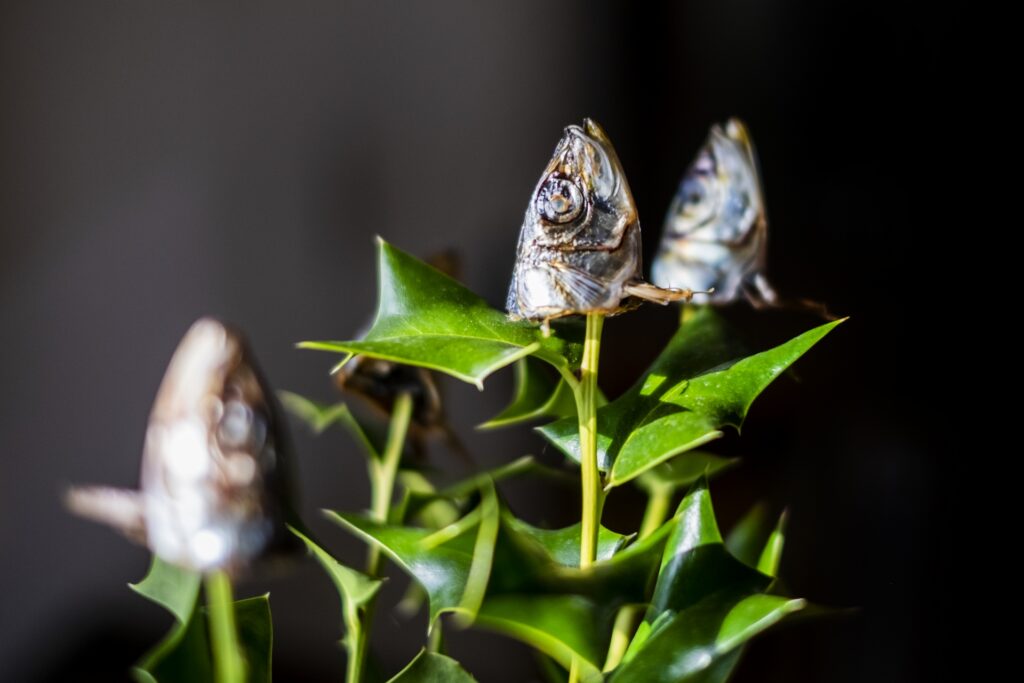
”Hiiragi iwashi” is a traditional talisman made by combining holly leaves with the grilled head of a sardine.
It was once displayed outside the front door to ward off evil spirits.
Why holly and sardines?
- The sharp holly leaves were believed to poke the eyes of demons
- The strong smell of grilled sardines was thought to drive them away
Although this custom is rarely seen today, some regions in Japan may still preserve the tradition.
The Origin and Meaning of Bean‑Throwing (Mamemaki)
In Japan, rice, wheat, and soybeans have long been believed to contain divine spirits. Among them, soybeans—being larger—were thought to hold more spiritual power, making them ideal for driving away evil.
The “demons” of Setsubun symbolize negative things such as illness, misfortune, and the harmful emotions that build up inside us.
By throwing beans, people hoped to chase away these negative forces and invite good health and good fortune.
Japanese people love wordplay, and several linguistic theories explain why beans are used:
- Beans (Mame) sounds like “ma wo messu” — “to destroy(messu) evil(ma)”
- Roasting beans (Mame Wo Iru) sounds like “ma me wo iru“— “to shoot(iru) the eyes of demons(ma me)”
These cultural beliefs helped shape the tradition of bean‑throwing.
How to Perform Bean‑Throwing at Home
Preparing the Beans
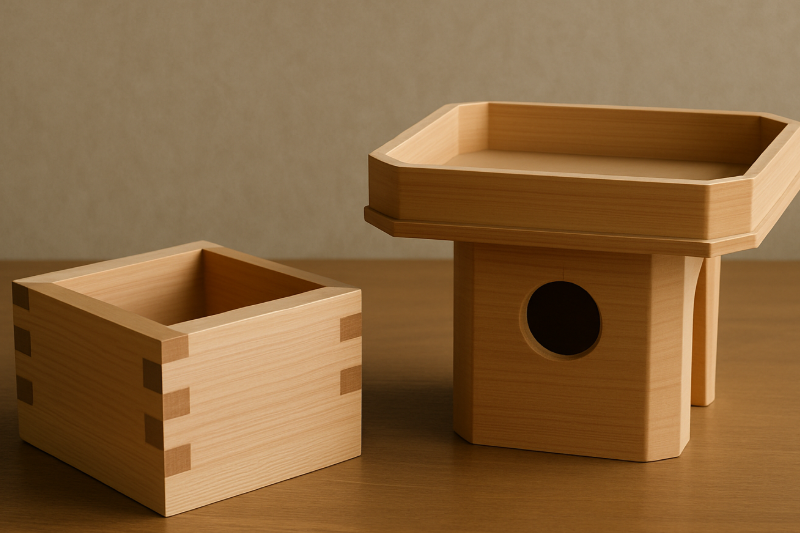
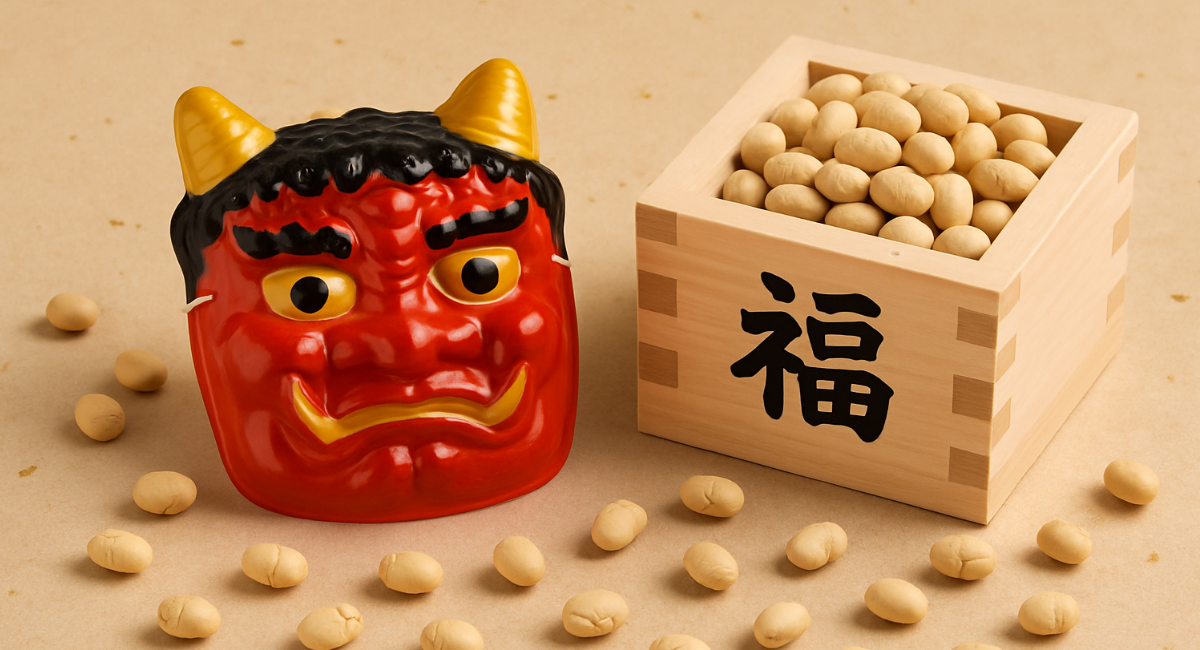
In the past, roasted soybeans were placed in a wooden box called “fukumasu” or on a ceremonial tray called “sanpō”, then offered to the household shrine.
By placing them before the gods, the beans were believed to receive divine power and become fukumame (“lucky beans”).
Today, most families simply buy roasted soybeans from the store.
In my home, because we have children, we use peanuts in the shell—they’re easier to clean up!
The Bean‑Throwing Ritual
Families perform the ritual at night, when demons are believed to appear.
Some throw beans inside the house, others at the entrance. We always do it at the front door.
One family member wears an oni (demon) mask, and the others throw beans while shouting:
- “Oni wa soto!” — Demons out
- “Fuku wa uchi!” — Good fortune in
The direction matters:
- “Oni wa soto!” → throw beans outside
- “Fuku wa uchi!” → throw beans inside
Some families throw beans in each room before finishing at the entrance.
Just be careful not to throw too hard!
What to Do With the Beans Afterward
Beans thrown inside the house are considered fukumame, so you can eat them.
Beans thrown outside are usually discarded.
Foods Eaten on Setsubun in Japan
Fukumame(Lucky Beans)
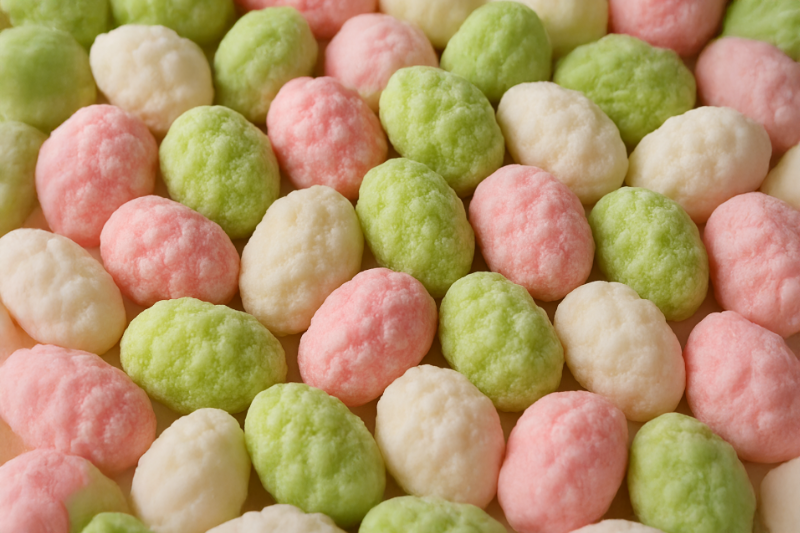
Eating fukumame is believed to bring good health and good fortune for the year. Traditionally, you eat your age plus one bean.
This comes from the old Japanese counting system, where a person is considered one year old at birth.
The extra bean symbolizes a wish for good health in the coming year.
But honestly… they’re so tasty that I always eat more than my age!
In addition to plain roasted soybeans, there are also colorful sweet beans coated in sugar—pink, white, green, and more. They’re especially popular with children.
And don’t forget to pick up and eat the beans you threw inside the house!
Ehoumaki: Sushi Roll Eaten While Facing the Lucky Direction
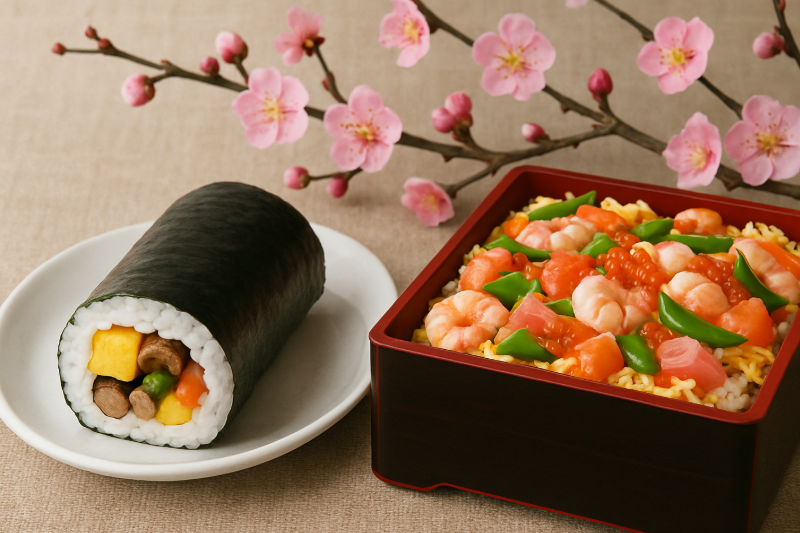
Every year, there is a “lucky direction” called “ehō”, which changes annually.
Ehoumaki is a thick sushi roll eaten while facing that direction.
Traditionally, ehoumaki contains seven ingredients, representing the Seven Lucky Gods of Japanese folklore:
- Daikokuten
- Bishamonten
- Ebisu
- Jurōjin
- Benzaiten
- Fukurokuju
- Hotei
Common fillings include “kanpyō”, “simmered shiitake”, “omelet or datemaki”, “eel”, “sakura denbu”, “shrimp”, and “cucumber”.
But you can use any ingredients you like.
Eating ehoumaki is said to bring business success and good health.
There is also a rule: You’re supposed to eat the entire roll in silence, without talking.
I used to follow this rule, but now I prefer to enjoy my sushi slowly—so I don’t do it anymore!
During this season, supermarkets are filled with ehoumaki and sushi.
Recently, even “ehō rolls” (cake versions) have become popular.
Setsubun Soba (Buckwheat Noodles)
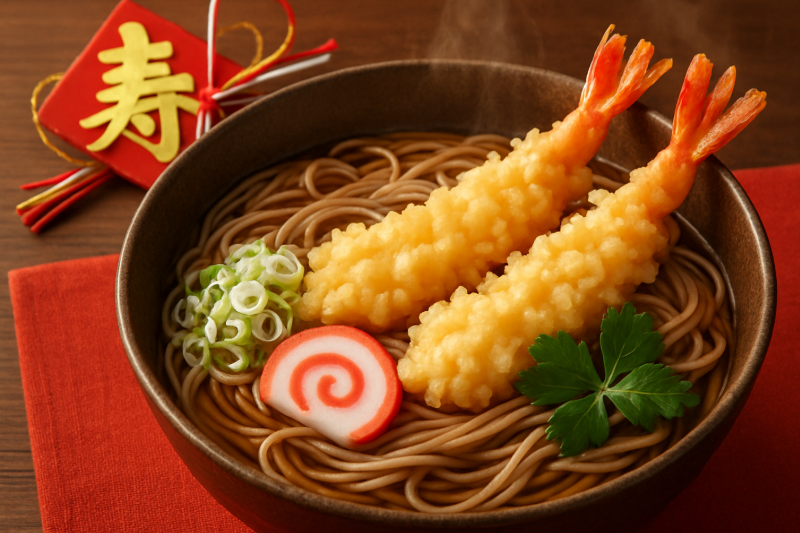
Just like eating soba on New Year’s Eve, some people eat soba on Setsubun as well. Long noodles symbolize long life, so eating them is considered auspicious.
Since Risshun used to mark the beginning of the new year, the custom of Setsubun soba may actually be older than New Year’s soba.
Summary
How was it? The customs introduced here are general ones, and traditions may vary from region to region.
Exploring these differences can be a fun way to discover the diversity of Japanese culture.
Japan is full of fascinating traditions.
Why not bring a little bit of Japanese culture into your daily life?
Thank you for reading.
A hinoki wooden masu gently fills the air with its soft, natural aroma, adding a warm touch to your Setsubun celebration.
It’s also a lovely choice for enjoying sake.
(View on Amazon →https://amzn.to/4c1CGgJ)
コメント