
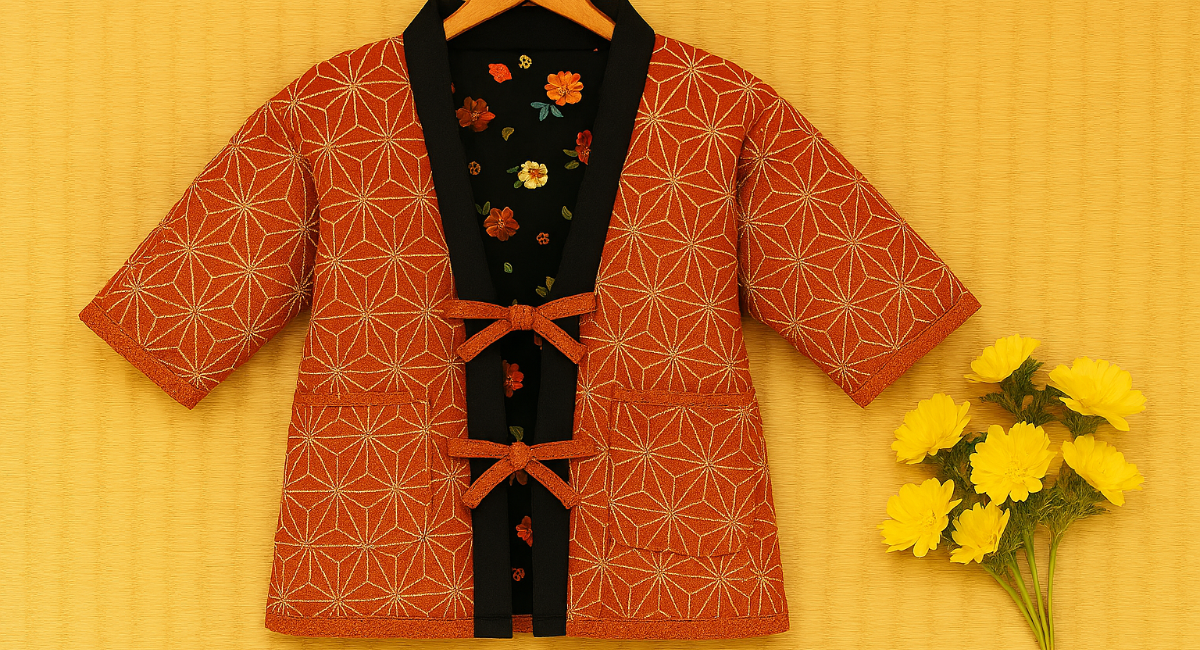
In winter, Japanese homes have a unique kind of quiet.
The cold morning air, the soft sound of the heater, the steam rising from a cup of tea.
Among these small moments of winter life, there is a traditional garment that has been quietly loved for generations: the hanten.
Without using electricity, a hanten creates warmth with nothing more than fabric and cotton.
This simple wisdom has been passed down through Japanese life and still lives on today.
What Is a Hanten?
A hanten is a traditional winter jacket worn by common people since the Edo period.
While upper-class families wore haori over their kimono, ordinary people needed something practical and affordable.
The hanten was created for that purpose.
It is short, easy to move in, and can be slipped on quickly during housework or breaks at work.
Carpenters, craftsmen, fishermen, and even hikeshi (firefighters of the Edo period) wore them.
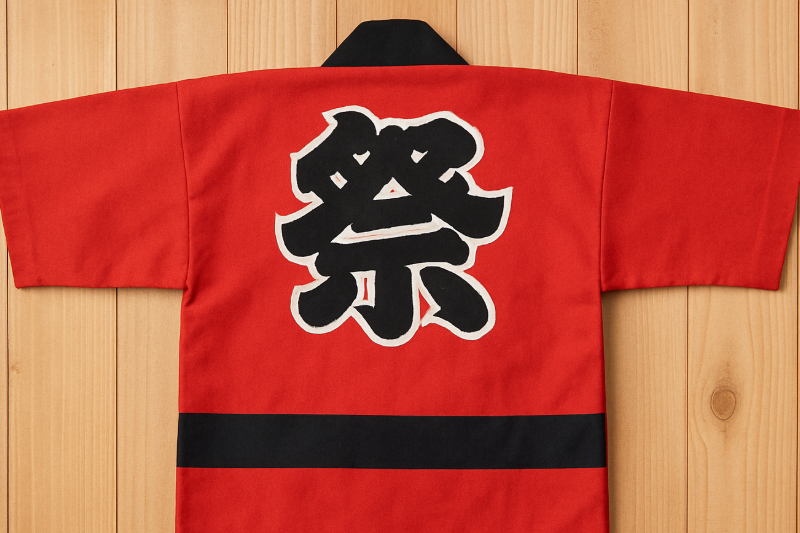
On the back, shops often added their crest or logo so people could recognize their trade at a glance.
These were called shirushi-banten, and this tradition later evolved into the modern matsuri hanten worn at festivals.
Today, winter hanten with cotton padding are called “wata-ire hanten”,
while the unpadded summer festival version is called “happi”.
You can often see happi coats at summer festivals, local fire brigades, and even during store sales events.
Structure of a Hanten: Wisdom in the Details
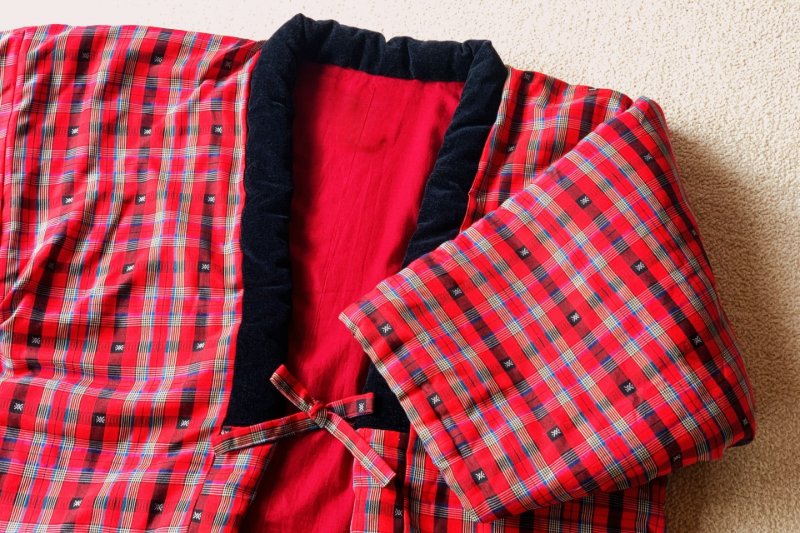
A hanten may look simple, but it contains thoughtful design.
Black Collar
The collar is often made from a separate black fabric.
It resists dirt and wear, and gives the garment a clean, sharp look.
Soft, Padded Cotton
The cotton traps air, making the hanten light yet very warm.
It holds a gentle heat—like sitting in front of a stove.
Patterns and Colors
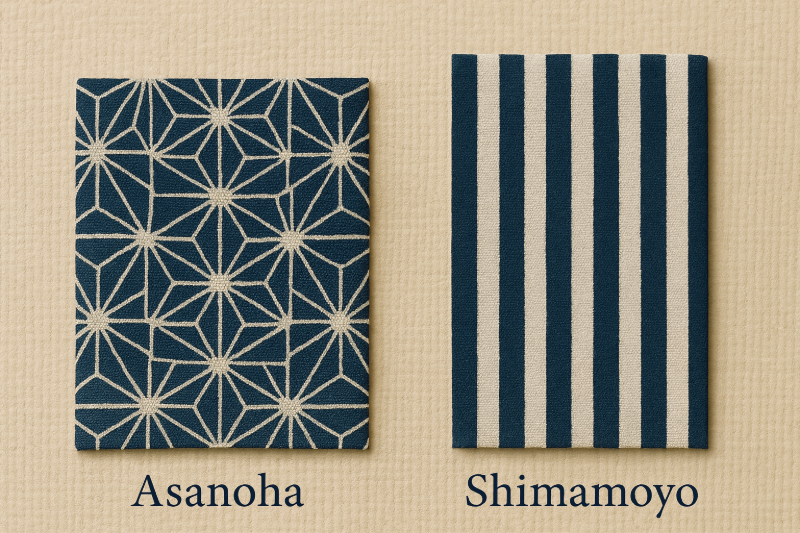
Hanten often feature patterns and colors unique to Japan.
For example, traditional Japanese patterns like asanoha (hemp leaf) and shima (stripes) are often seen in various textiles.
Asanoha symbolizes healthy growth, while stripes are a classic Edo-style pattern that carries a sense of iki—simple, understated elegance.
Both designs have a quiet beauty that blends naturally into winter life in Japan.
Traditional Japanese colors are often inspired by nature, giving them a deep, muted tone.
Hanten commonly use shades such as persimmon brown, indigo, dark chestnut, and sumi‑black.
They are not flashy, but each color settles gently into the soft winter light inside a Japanese home.
Depending on the region and the maker, you can also find hanten with unique patterns and color variations.
This is why hanten come in such a rich variety of appearances.
Simple Construction
Traditional hanten have a very simple structure.
They do not have side gussets or chest ties, and the fabric is not layered too heavily, which makes them easy to move in.
At first glance, the thin appearance may seem cold, but the inside is filled with cotton, making them surprisingly warm.
There was even an experiment comparing the warmth of down jackets, fleece, and hanten.
The results showed that wearing a hanten raised body temperature the most.
Modern Features of Hanten
Modern hanten are slightly different from the traditional ones.
Most of them now come with chest ties, and while they keep the classic shape, the sleeves and length have been updated to fit today’s lifestyle.
Some styles use lightweight padding, and others come in longer lengths or even with hoods, making them closer to modern clothing.
Modern padded hanten also include thoughtful details that make them easier to move in.
Many have gussets added to the sides or under the sleeves—something traditional hanten did not have.
A gusset is a small piece of fabric that allows for better movement.
These subtle features make hanten practical even with thick padding inside, allowing you to do housework and move comfortably.
They now come in many variations, stylish as well as wonderfully warm.
The Place of Hanten in Modern Japan
In modern Japan, hanten are not commonly worn in everyday life.
For winter outings, fleece jackets, down coats, and other modern outerwear are far more typical.
Some younger people have never even seen a hanten before.
Even so, among those who love traditional Japanese living or value quiet time at home, hanten continue to be quietly cherished.
If you see someone confidently wearing one outside, they are likely a fan of traditional clothing or someone who works with hanten in some way.
Kurume Padded Hanten (A Traditional Craft of Fukuoka)
In Fukuoka, where I live, there is a traditional craft known as Kurume padded hanten.
Made with fabric woven in Kurume and carefully padded by two artisans working together, each hanten is finished by hand.
They are produced mainly in Chikugo City, Kurume City, and Ōki Town, and are designated as a traditional specialty of Fukuoka Prefecture.
They are durable, long‑lasting, and gently warm—perfect for quiet winter days at home.
Watching the artisans work is like watching them have a conversation with the fabric.
You can feel the time, care, and craftsmanship that go into each piece.
If you’re interested, feel free to take a look.
Watch the video here
Summary
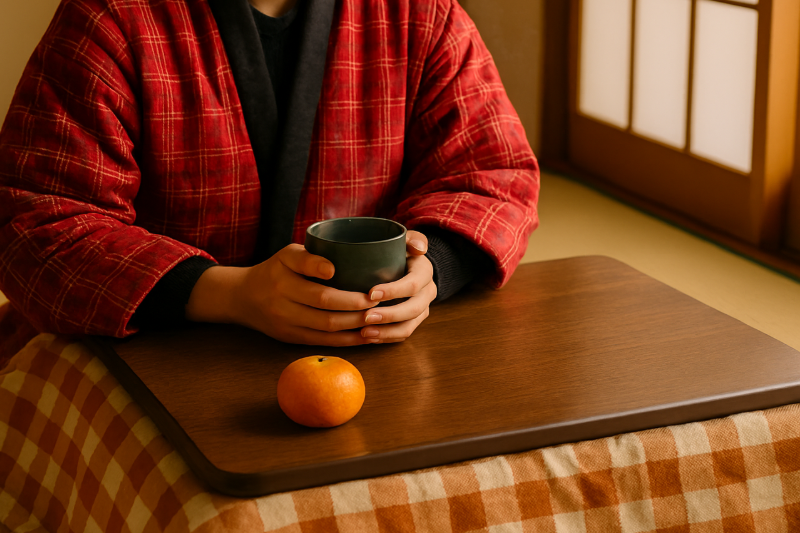
As I mentioned earlier, hanten are not the most common winter clothing in modern Japan.
To be honest, they are more suitable for wearing at home or for short trips to the neighborhood rather than going out for the day.
But when you want to feel a quiet sense of “Japan” in your winter life, a hanten is perfect.
On cold days, wearing a hanten, sitting under the kotatsu, and eating mandarins— to me, this is one of the classic winter scenes of Japan.
When you put on a hanten, the winter air feels just a little softer.
It reminds you of the quiet moments inside a Japanese home and the simple wisdom that has been passed down through generations.
Hanten are becoming popular overseas as well.
I hope you find one that suits your style.

コメント