
As the gentle spring breeze slowly turns into the warmth of early summer, Japan celebrates Children’s Day.
Originally, this day was part of Tango no Sekku, one of Japan’s five seasonal festivals, and has long been cherished as a tradition to pray for the healthy growth of boys.
What is Children’s Day? (May 5 – Tango no Sekku)
In Japan today, May 5 is celebrated as the national holiday Children’s Day, a day established to “respect children’s personalities, promote their happiness, and express gratitude to mothers.”
Behind this modern holiday lies Tango no Sekku, a traditional celebration that has long been cherished in Japan.
Tango no Sekku originally came from China, where people used medicinal herbs on this day to ward off evil spirits.
When the custom reached Japan, it became closely connected with samurai culture and developed into a celebration to pray for the healthy growth of boys.
Because people decorated their homes with iris leaves to drive away evil, the day was also called “Shōbu no Sekku” (the Iris Festival).
Today, Tango no Sekku lives on as part of Children’s Day, continuing as a tradition to wish for children—especially boys—to grow up strong and healthy.
Colorful carp streamers, decorative helmets, kashiwa-mochi, and chimaki are all beloved symbols of early summer that make this celebration special.
Decorations for Children’s Day

On Children’s Day, families display kabuto helmets, traditional swords, Gogatsu dolls, and koinobori (carp-shaped streamers).
Koinobori (Carp Streamers)
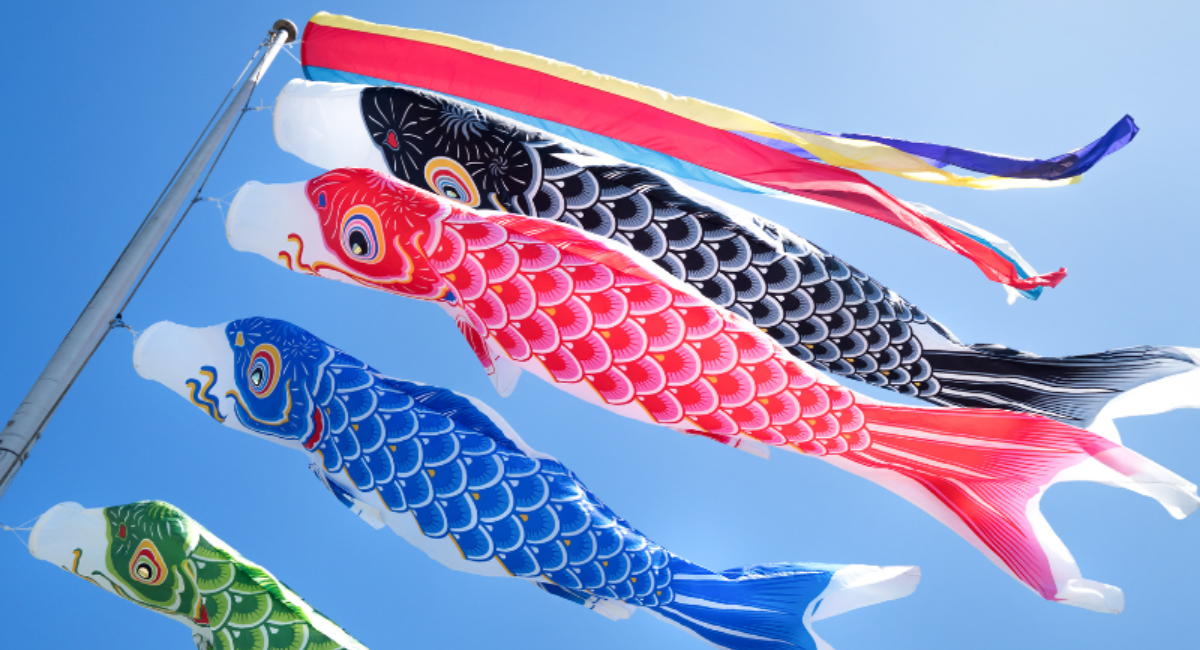
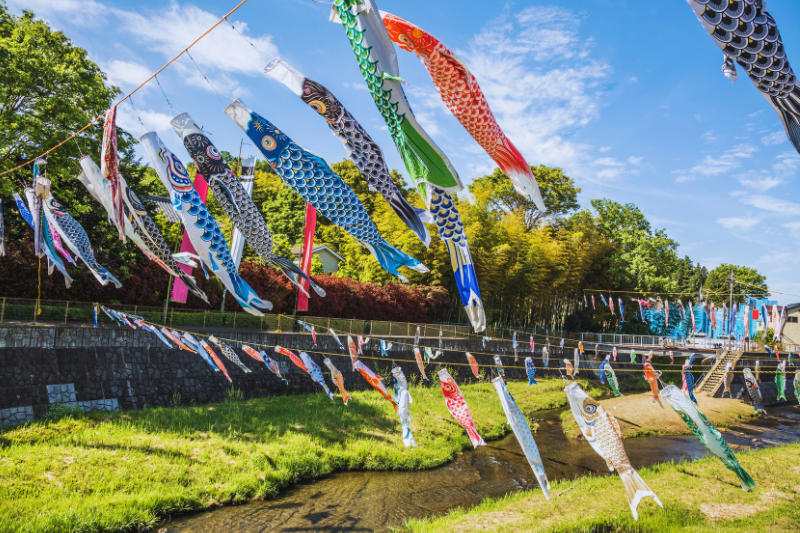
Koinobori are carp-shaped streamers that gently swim through the spring sky, creating one of the most iconic early-summer scenes in Japan.
In the ancient Chinese text Book of the Later Han, there is a legend known as Tōryūmon, which tells of a carp that climbs a steep waterfall and transforms into a dragon.
Because of this story, the carp came to symbolize success, strength, and rising in the world.
Its powerful image of swimming upstream inspired the tradition of wishing for children to grow strong and overcome challenges.
Even today, the word “Tōryūmon” is used to describe a difficult gateway one must pass through to achieve success.
In a typical koinobori set, the black carp represents the father, the red carp the mother, and the blue or green carp the children.
Although fewer families display large outdoor koinobori today, some regions still put up personalized banners with children’s names, preserving local traditions.
Gogatsu Dolls
Gogatsu dolls are decorative figures modeled after samurai warriors, armor, and helmets, and they carry the wish for children to grow strong and courageous.
In the days of the samurai, families celebrated the birth of a boy by gifting real armor or helmets.
Over time, this custom evolved into displaying ornamental dolls instead.
Today, many families choose compact versions or designs made of wood or ceramics that blend naturally with modern interiors, selecting styles that suit their home and personal taste.
While kabuto displays symbolize protection, Gogatsu dolls represent bravery and the hope that children will grow up with strength and spirit.
Kabuto Display
The kabuto helmet, originally used as protective armor, is displayed with the hope that children will grow up strong and healthy.
Kabuto decorations often feature auspicious motifs such as kuwagata (crescent-shaped crests symbolizing strength), ryūzu (dragon-shaped ornaments), and gold embellishments, all representing power and good fortune.
Because the word shōbu (iris) sounds the same as shōbu meaning “martial spirit,” the kabuto also became associated with samurai values and the wish for boys to grow up brave and resilient.
During the Kamakura period, samurai would take their armor and helmets outside to air them out and protect them from the humidity of the rainy season.
Some say this practice later evolved into the custom of displaying kabuto.
Many families begin setting up their kabuto displays in early to mid-April, around the same time as koinobori and Gogatsu dolls.
They are often placed in a visible spot—such as the living room or a traditional alcove—reflecting the family’s wish for the child’s health and well-being.
Iris Flowers & Iris Leaves
Iris Flowers
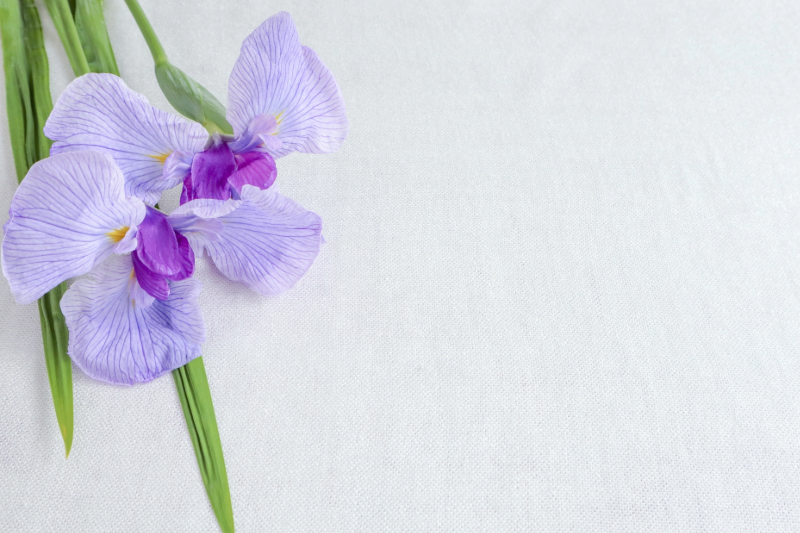
The hanashōbu iris is a graceful flower that blooms in early summer and brings a sense of the season to Tango no Sekku.
Because its name is pronounced the same as shōbu (iris), it is sometimes displayed as a good-luck charm.
Iris flowers blooming along rice fields and roadsides create a scene that feels distinctly like Children’s Day.
Many people enjoy welcoming the season by decorating their gardens or homes with these flowers.
One of the joys of seasonal festivals in Japan is simply feeling the change of the seasons.
Placing iris flowers in your room is a gentle way to invite the arrival of early summer.
Shōbu-yu (Iris Bath)
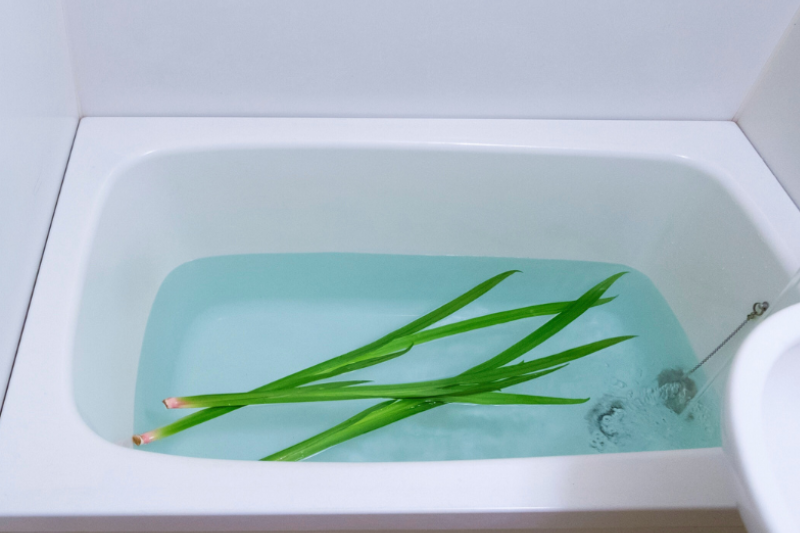
Iris leaves have a strong fragrance and were traditionally believed to ward off evil spirits.
The components found in the leaves are also said to have a relaxing effect, and the custom of taking a shōbu-yu bath continues today as a way to pray for good health.
Just like kabuto displays, the word shōbu (iris) is associated with shōbu meaning “martial spirit” or “victory,” giving the bath an added meaning of wishing for strength and good fortune.
As May 5 approaches, bundles of iris leaves are sold in supermarkets and flower shops.
For the bath, it is the leaves, not the flowers, that are placed in the water.
Foods for Children’s Day
Kashiwa-mochi and Chimaki
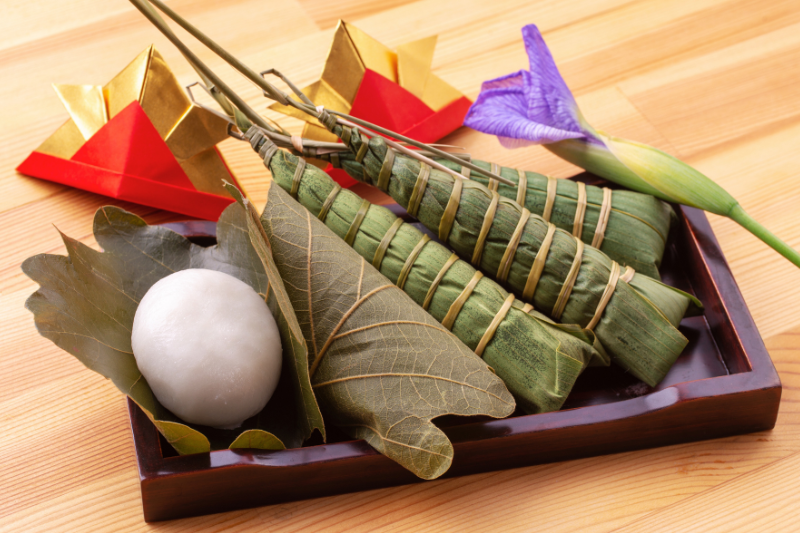
Kashiwa-mochi is wrapped in oak leaves, which do not fall until new buds appear.
Because of this, the sweet carries the meaning of family prosperity and continuity.
The sweet red bean paste inside is also considered auspicious, as beans were traditionally believed to have the power to drive away evil.
Chimaki, on the other hand, is wrapped in bamboo leaves.
Bamboo has natural antibacterial properties and has long been regarded as sacred in Japan.
In eastern Japan, kashiwa-mochi is more common, while in western Japan, chimaki is the traditional choice.
In recent years, you can even find cute Children’s Day treats at supermarkets, such as steamed buns shaped like koinobori.
How Children’s Day Is Celebrated Today
In Japan, Children’s Day often falls during Golden Week, a holiday period from May 3 to 5.
Many families spend the day going out together, visiting relatives, or enjoying meals with friends.
On the final day, it is common to relax at home, eat kashiwa-mochi, chimaki, or even festive cakes, and take photos to celebrate the children’s growth.
Spring is also a wonderful season for outings, and in my family, we pack a homemade lunch and head to a large park every year.
Some parks display koinobori swimming through the fresh green scenery, and seeing them soar high in the sky is truly breathtaking.
Summary
Tango no Sekku is an important Japanese tradition that celebrates children’s growth and happiness.
Each custom—koinobori, kabuto displays, shōbu-yu, kashiwa-mochi, and chimaki—carries its own meaning, and together they form a seasonal culture that families continue to enjoy today.
Are there any traditions in your country or region that celebrate children’s growth?
Learning about different cultural customs may open up new ways to enjoy the seasons.


コメント