
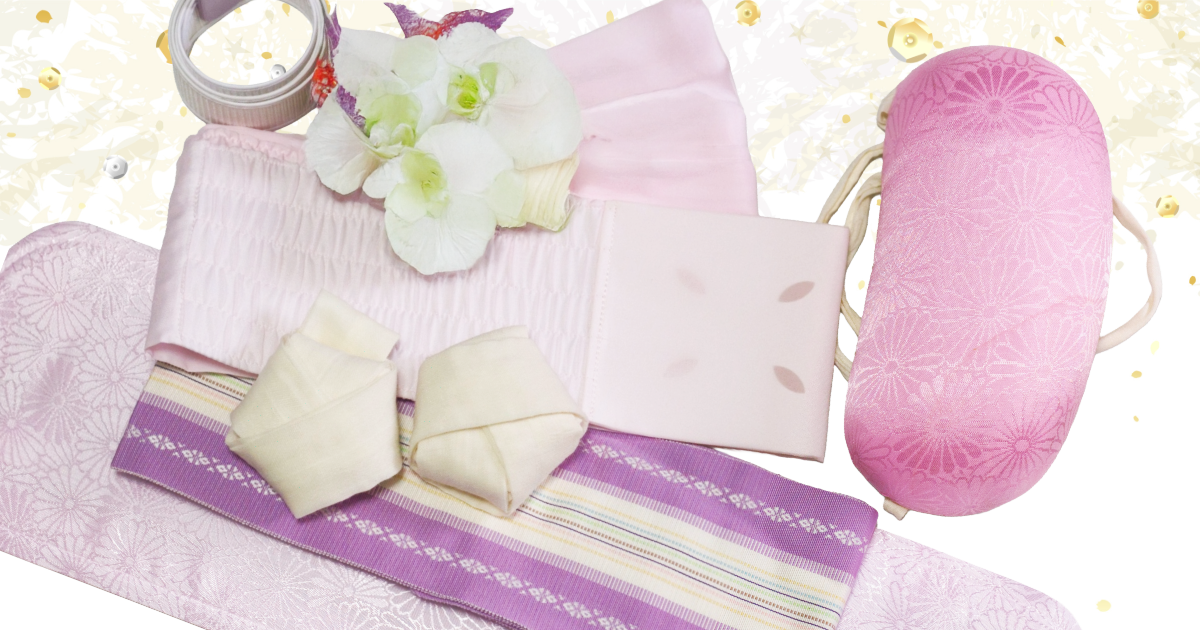
Kimono dressing is based on a very simple idea: wrapping fabric around the body and securing it with ties.
Because of this structure, a few small accessories are needed to keep everything in place.
At first, it may feel like there are many things to prepare, but each step reveals a new part of the kimono world.
Here, you’ll find the basic accessories that beginners can start with to feel more confident.
What are kitsuke accessories?
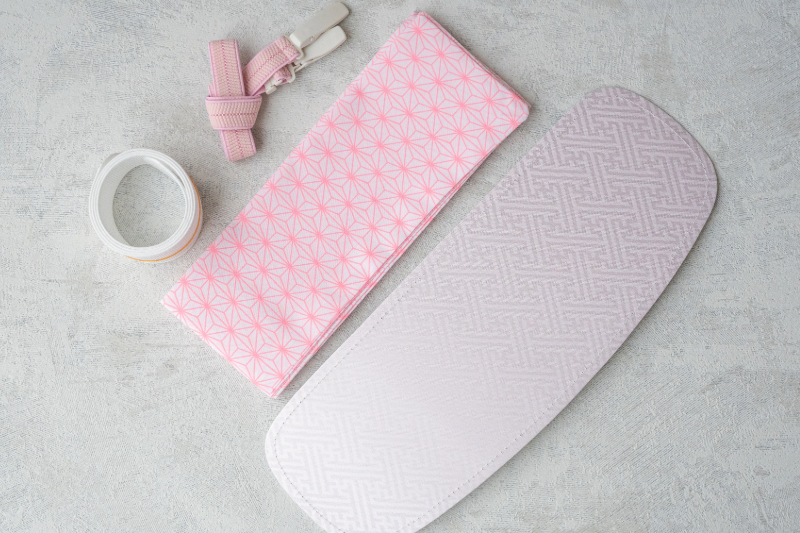
These are a few useful items that help keep your kimono neat and beautifully shaped.
Koshihimo
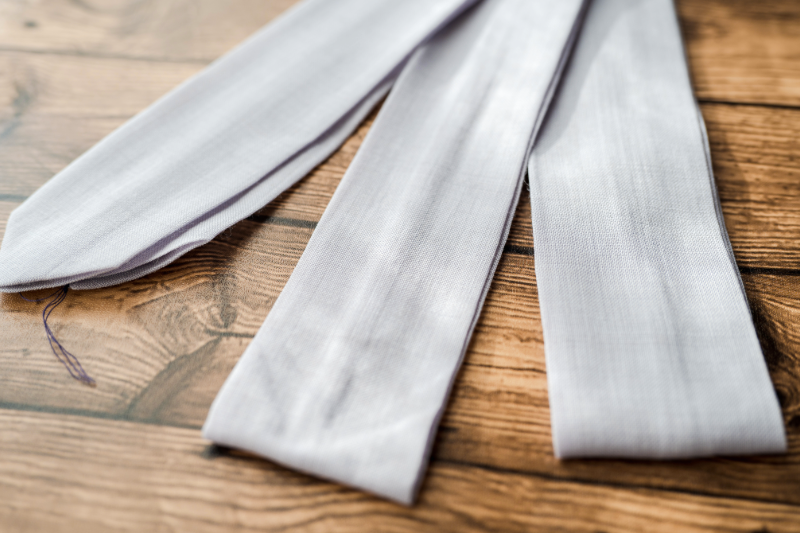
A simple tie used to temporarily hold the kimono or nagajuban in place.
They come in materials like muslin or polyester, and beginners may find lighter, softer ones easier to handle.
Having three to five is usually enough.
Datejime
A soft belt wrapped over the kimono or nagajuban to smooth wrinkles and keep the neckline tidy.
Having two—one for the nagajuban and one for the kimono—helps prevent the layers from shifting.
Velcro-style datejime are especially beginner-friendly.
I personally use a Hakata-ori datejime, and I highly recommend it.
Hadajuban & Susoyoke
These are worn under the nagajuban as inner layers.
They absorb sweat and help keep the kimono clean.
A one-piece “kimono slip” is a convenient option for beginners.
Erishin
A thin insert placed inside the haneri (collar) of the nagajuban to help the collar stand neatly.
Just adding this makes a big difference in how the neckline looks.
Be sure to insert it before putting on the nagajuban.
Kimono Clips
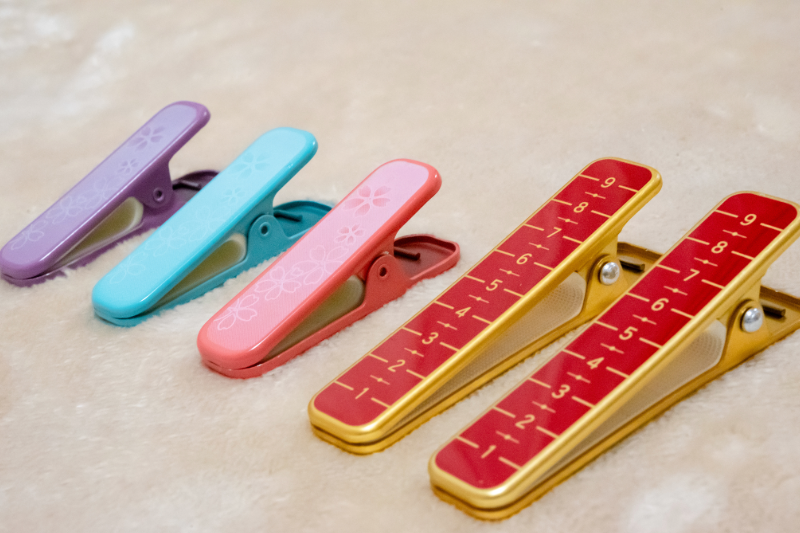
A handy tool used to temporarily hold fabric in place while dressing.
They look like clothespins, but they’re designed not to damage kimono fabric.
Having two large clips and three small ones is a good starting point.
Obi-ita
A flat board placed under the front of the obi to keep it smooth.
It prevents wrinkles and creates a clean, elegant silhouette.
Tabi
Traditional socks worn with kimono.
White is standard for formal wear, while colored tabi can be enjoyed for casual outfits.
Stretch types are easy to wear and popular among beginners.
Obi-makura
A small pillow-like accessory used when making the otaiko knot.
It’s used for both formal and casual styles.
Larger ones are typically used for formal wear, while smaller ones suit casual outfits.
Obiage
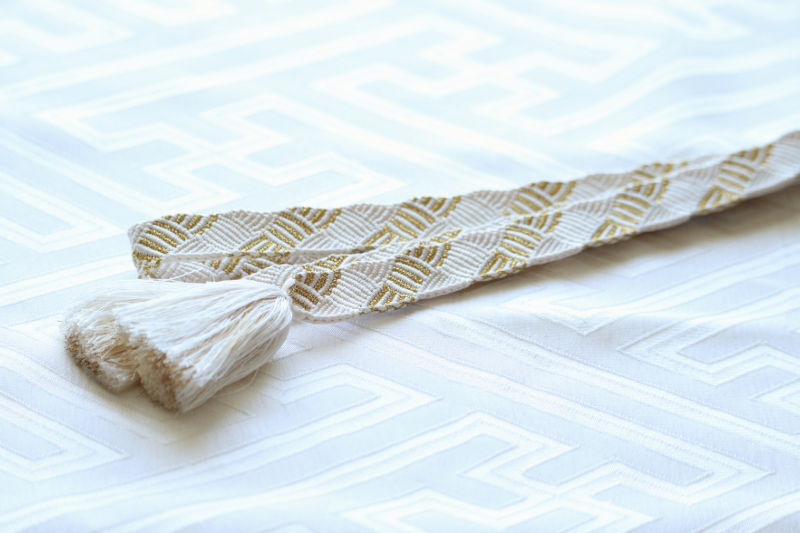
The obiage is a piece of fabric used to cover and secure the obi-makura. It’s essential when tying an otaiko knot.
Because a small part of it shows from the outside, it becomes an important accent in your coordination.
For beginners, soft colors or plain designs are the easiest to match with any kimono.
Obijime
The obijime is a cord used to secure the center of the obi.
It plays a more important role than it looks, keeping the obi from loosening.
Round cords are common for formal wear, while flat ones are often used for casual styles.
The color and weaving style can change the overall impression significantly.
Because it sits at the center of the obi, it works as a finishing accessory that brings the whole look together.
Nice to Have
Choosing the right layers and accessories can make kimono dressing more comfortable throughout the year.
Because Japan has significant changes in temperature and humidity, selecting season-appropriate items—especially undergarments—helps keep you comfortable.
Korin Belt
A convenient tool that helps keep the collar in place.
Normally, the collar is secured with a koshihimo, but using a Korin Belt can save time and make the process smoother.
It also helps prevent the neckline from shifting, making it especially helpful for beginners.
Padding Towels
Towels used to gently smooth out the body’s natural curves.
Kimono looks most beautiful with a straight, cylindrical silhouette, so adding padding helps create a stable shape.
I use simple white towels for this.
When you have your kimono dressed by a professional, they may use cotton padding instead.
Kasane-eri (Date-eri)
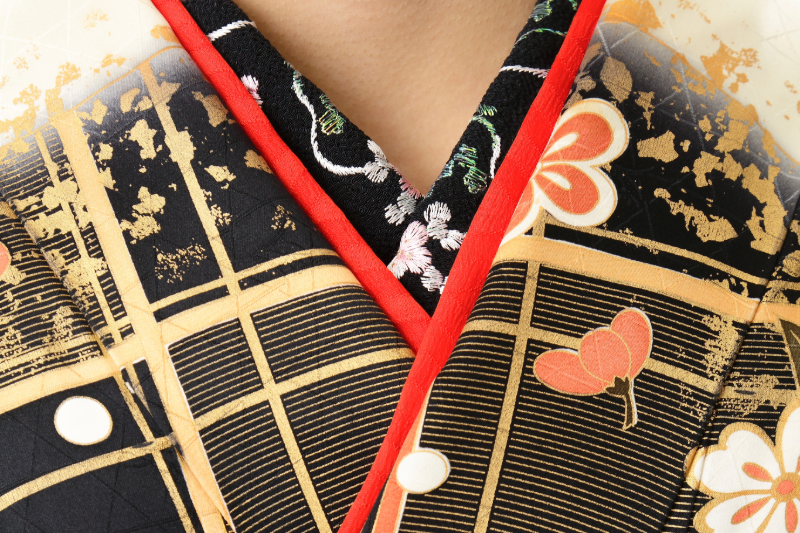
A decorative collar that adds a touch of color and elegance to the neckline.
It’s not essential for dressing, but the kasane-eri is a thin piece of fabric placed at the collar to make it look as if there is an extra layer underneath.
It’s often used for formal occasions, adding brightness and a refined look around the face.
The impression changes greatly depending on the color and pattern, making it a fun accent piece for coordination.
For beginners, choosing a color similar to the kimono or obi helps it blend naturally and reduces the chance of mismatching.
Common Points Beginners Often Struggle With
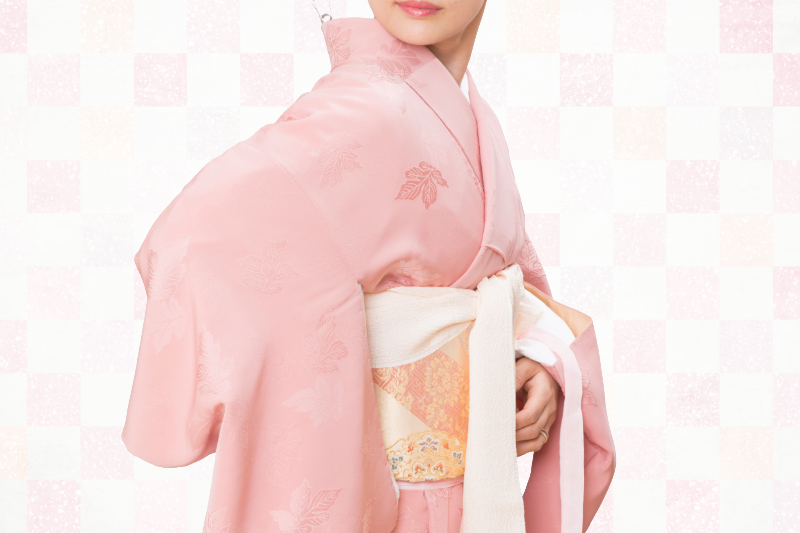
When you’re new to kimono dressing, it’s completely normal to wonder, “Which item do I use first?” or “What’s the correct order?”
Here, I’ve gathered a few points that beginners often find confusing.
The explanations are kept simple so that readers overseas can easily understand them.
The accessory names sound similar and are hard to remember
Koshihimo, datejime, obi-ita… At first, they may all look the same.
But once you learn the purpose of each item, you’ll naturally start to tell them apart.
Not knowing the correct order to use them
Kimono dressing follows this order: Nagajuban → Kimono → Obi
The accessories are used along this same flow, so keeping the order in mind makes everything much easier.
3. Unsure whether padding is necessary
A straight, cylindrical silhouette is considered beautiful in kimono, so padding helps create a stable shape.
However, it’s not mandatory.
For beginners, one or two towels are more than enough.
Difficulty choosing colors for the obiage and obijime
Color coordination takes practice, but choosing shades similar to your kimono or obi is a safe option.
Once you get used to it, adding accent colors becomes fun.
Confusing the difference between Haneri and Kasane-eri
Both add color to the neckline, but their roles are different.
- Haneri: the basic collar sewn onto the nagajuban — always necessary
- Kasane-eri: a decorative collar used mainly for formal occasions — optional
Knowing this difference makes kimono coordination much easier.
Feeling overwhelmed by the many types of obi
There are several types of obi, such as nagoya obi and fukuro obi, but obi varieties are explained in detail in a separate article.
Since this guide focuses only on accessories needed for dressing, please refer to that article if you want to learn more about obi types.
Modern Kimono Dressing Today
In recent years, there has been a growing trend in the kimono community toward finding easier and quicker ways to dress.
While learning traditional techniques is important, many people who enjoy kimono as a hobby or part of their daily life prefer methods that allow them to dress more casually and without spending too much time.
Convenient items such as adhesive haneri (collars) and Korin Belts have become more common, making the dressing process faster and simpler.
In Japan, the people who can dress themselves in kimono are usually those who love kimono or those involved in traditional arts such as tea ceremony or dance.
For formal occasions, proper dressing techniques are required, so many people choose to hire a professional kimono dresser.
Summary
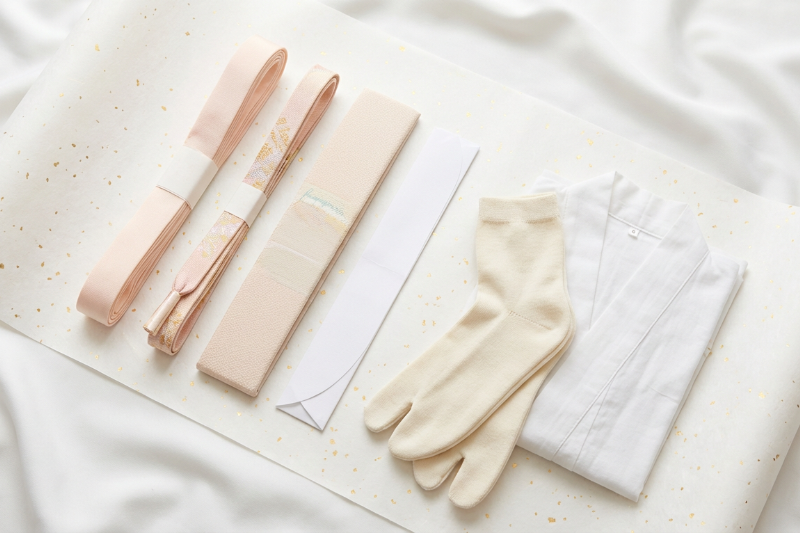
You may have realized that wearing kimono requires more small accessories—and more steps—than you first expected.
When I began learning kimono dressing, I also didn’t imagine that so many careful preparations were involved.
But perhaps it is because it cannot be worn instantly that kimono carries a special kind of joy.
In the process of gathering these accessories and completing each step with care, I feel that a uniquely Japanese sense of beauty comes to life.
These accessories form the foundation for wearing kimono beautifully.
Having them ready from the beginning makes the dressing process much easier.
Reference Video: How to Wear Kimono
This video shows the full process of kimono dressing, including how each accessory is used.
Even though the explanation is in Japanese, the steps are slow and easy to follow, making it helpful for beginners.
コメント