
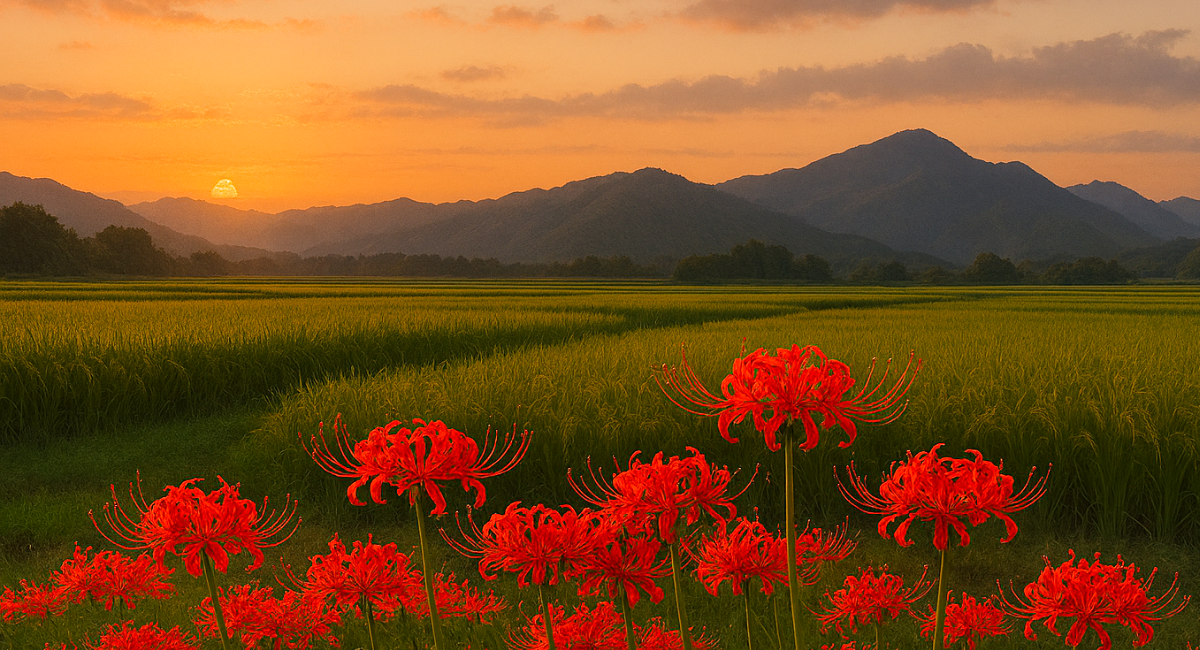
In Japan, there is a quiet tradition called Ohigan, observed twice a year in spring and autumn.
During this time, when day and night are nearly the same length, the air feels softer, as if the seasons are gently shifting.
Families visit graves, offer ohagi, and spend a peaceful moment remembering their ancestors — a tender custom that has been cherished for generations.
What is Ohigan?
Ohigan is a uniquely Japanese Buddhist tradition observed for seven days around the spring and autumn equinoxes.
Each season’s equinox day serves as the middle day, with three days before and after making up the full period.
Because the dates of the equinoxes change slightly each year, the timing of Ohigan also shifts.
In most years, the spring Ohigan falls around March 20, and the autumn Ohigan around September 22.
During this time, when day and night are nearly the same length, the seasons feel perfectly balanced.
In Japan, people have long believed that when nature finds its rhythm, our hearts naturally follow.
Origin of Ohigan

The Relationship Between the Sun and the Other Shore
On the days of the spring and autumn equinoxes, the sun rises directly in the east and sets directly in the west — a rare and meaningful alignment.
In Buddhist belief, the Pure Land is said to lie far to the west.
Because of this, these equinox days have long been seen as a moment when “this world” and “the other shore” come closest together, giving rise to the gentle custom of remembering and honoring our ancestors.
This Shore and the Other Shore
In Buddhism, the world we live in is called shigan, “this shore,” while higan, “the other shore,” refers to the enlightened realm free from suffering and confusion.
Ohigan is a gentle moment set aside to draw a little closer to this spirit of higan.
The Six Paramitas and the Seven Days of Ohigan
During the seven days of Ohigan, there is a traditional idea that each day is devoted to practicing one of the Six Paramitas — core Buddhist virtues.
But there’s no need to think of them as difficult teachings. In everyday terms, the Six Paramitas can be understood like this:
- Being kind to others (dāna / generosity)
- Keeping your promises (śīla / discipline)
- Letting go of anger (kṣānti / patience)
- Continuing your efforts steadily (vīrya / diligence)
- Calming the mind (dhyāna / meditation)
- Thinking deeply and clearly (prajñā / wisdom)
How These Teachings Live On in Japanese Culture
These Buddhist teachings have blended naturally with Japan’s deep appreciation for nature and respect for ancestors.
Today, they continue to live on in gentle customs such as visiting graves, offering ohagi, and admiring the red higanbana flowers that bloom around this season.
Spring and Autumn: How They Differ
Spring Ohigan — A Quiet Prayer for New Beginnings
Spring Ohigan takes place just as the winter chill begins to fade and gentle light returns to the season.
- The sunlight grows brighter and the air feels lighter
- Plum and cherry blossoms begin to bloom
- It becomes a time that feels like renewal and fresh beginnings
During this season, people enjoy botamochi — sweet rice cakes named after the spring peony.
In some regions, they are made with smooth koshian (fine red bean paste).
Spring Ohigan is often felt as a quiet prayer to welcome a new season.
Autumn Ohigan — A Quiet Prayer of Gratitude for the Harvest
In contrast, the autumn Ohigan takes place as the summer heat fades and the air grows clear and crisp.
- Dusk arrives earlier, and the sky deepens in color
- Rice, fruits, and other crops reach their harvest
- It becomes a calm season when a deeper quiet settles in the heart
During this season, people enjoy ohagi — sweet rice cakes named after the autumn bush clover.
Autumn Ohigan is felt as a moment to give thanks for the season’s harvest and to quietly join your hands in reflection.
Botamochi and Ohagi
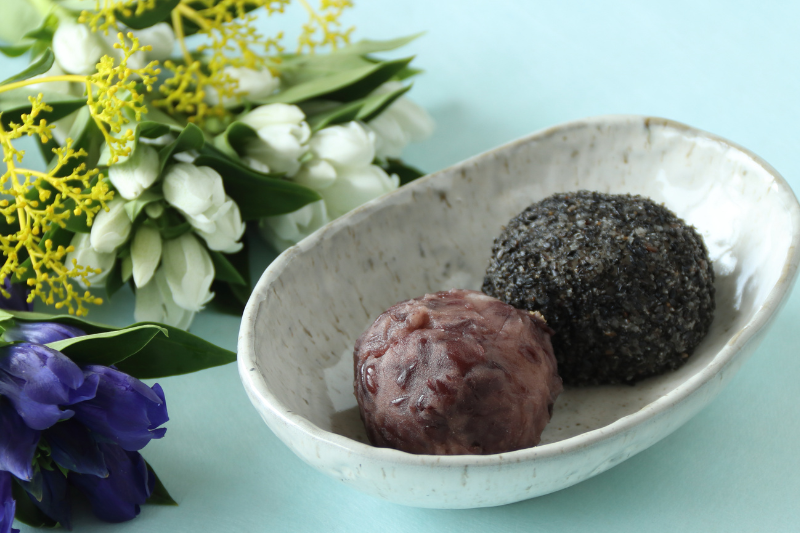
In Japan, it is customary to enjoy botamochi in spring and ohagi in autumn.
Both are simple sweets made from glutinous rice and red bean paste, and they are essentially the same food.
The difference in name comes from the seasonal flowers that Japan has long cherished.
- Spring → botamochi Named after the large, elegant peony (botan) that blooms in spring.
- Autumn → ohagi Named after the delicate bush clover (hagi) that blooms in autumn.
This way of reflecting the changing seasons in the names of foods shows the gentle sensitivity and aesthetic sense that are so characteristic of Japan.
In some regions, botamochi is made with smooth koshian, while ohagi is made with chunky tsubuan.
This is said to evoke the soft petals of the peony and the tiny clustered blossoms of the bush clover.
Although the distinction is not strictly observed today, the tradition of enjoying these sweets under different names each season is still quietly cherished.
Grave‑visiting traditions
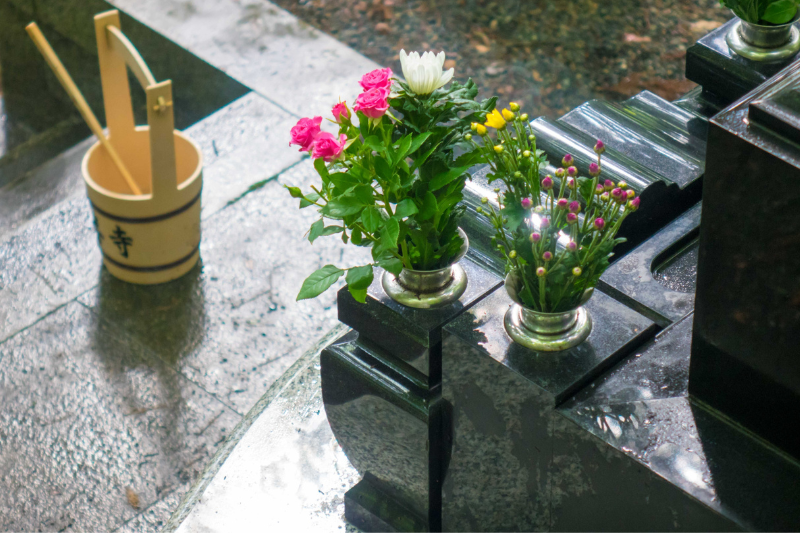
During Ohigan, many families visit their ancestors’ graves.
A grave is not only a place where ancestors rest, but also a quiet space to reflect on one’s family history.
When visiting, people gently wipe the gravestone clean, offer flowers and incense, and then place their hands together in prayer.
These simple actions carry a feeling of “Thank you for always watching over us.”
Spring and autumn Ohigan fall on the equinoxes, when day and night are nearly the same length — a moment when nature feels perfectly balanced.
For this reason, it has long been considered a fitting time to face our ancestors with a clear and steady heart.
Obon is also an important time to honor ancestors, but while Obon is seen as a period when ancestors “return home,” Ohigan is more like a day when we quietly go to visit them.
Spending a moment with folded hands, feeling the light and wind of the season, can become a gentle way to realign your own heart amid the busyness of everyday life.
Flowers for Ohigan
Spring Flowers for Ohigan
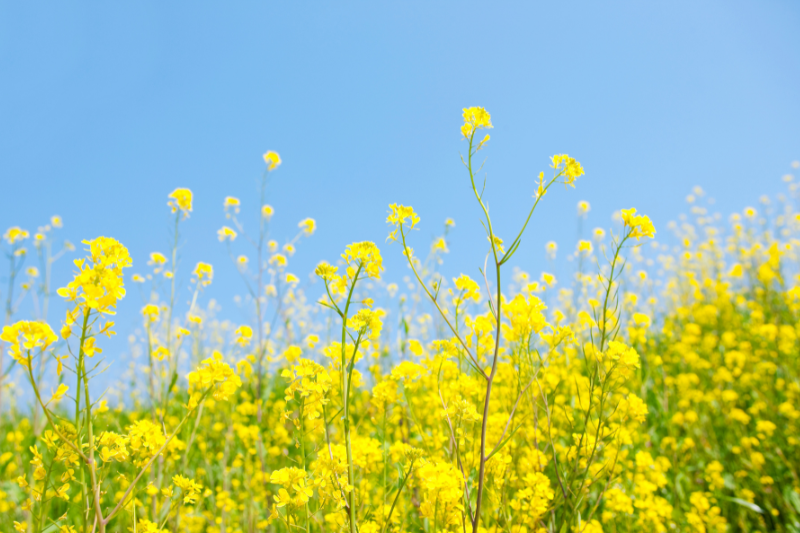
During the spring Ohigan, there is no single symbolic flower like the autumn higanbana, but people often offer seasonal blossoms such as cherry blossoms, plum blossoms, and rapeseed flowers.
- Soft, gentle colors
- Fragrances that signal the beginning of a new season
- Petals that glow in the bright spring light
Spring Ohigan carries a quiet atmosphere that gently supports the feeling of “Winter has passed, and a new season is arriving once again.”
Autumn Flowers for Ohigan
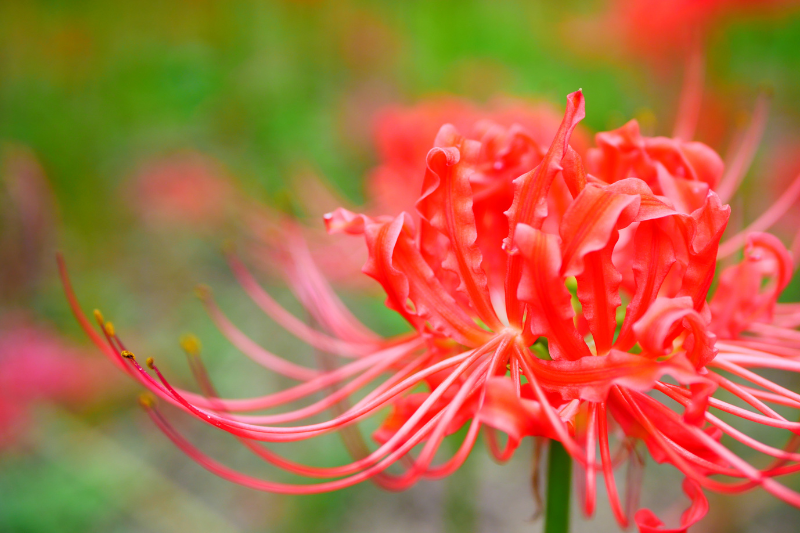
When people think of the autumn Ohigan, the flower that immediately comes to mind is the higanbana (red spider lily).
Its vivid, flame‑like red stands out beautifully against the clear autumn air.
The higanbana is often associated with meanings such as “reunion,” “passion,” and “memories,”
which makes it a fitting flower for a season dedicated to remembering ancestors.
Autumn is also the season of chrysanthemums, so many families offer white or yellow chrysanthemums as well.
Chrysanthemums have long been cherished in Japan as symbols of longevity and purity.
What spring and autumn Ohigan share is the Japanese sensibility of “aligning the heart with the changing seasons.”
Offering flowers is not only an expression of gratitude toward one’s ancestors— it also becomes a quiet moment to look inward and gently reconnect with your own heart.
How People Observe Ohigan Today

Compared to the past, lifestyles have become more diverse, and many people no longer observe Ohigan in a formal way.
Even so, Ohigan remains a quiet seasonal marker— a moment that lingers gently in the heart.
Today, the way people spend Ohigan is simple and flexible:
- Visiting the family grave and offering prayers with loved ones
- Remembering ancestors quietly at home if the grave is far away
- Placing flowers or sweets on the household altar
- Enjoying botamochi or ohagi to feel the season
- Taking a moment in the spring or autumn light to settle the heart
There are no strict rules for Ohigan.
What matters is taking a moment, at your own pace, to offer a quiet sense of gratitude.
Even a few minutes of pausing in the midst of a busy day to feel the season can gently soften the heart.
And even if you cannot visit a grave, spending a quiet moment remembering your roots or someone important to you is very much in the spirit of Ohigan.
Summary
In modern times, it feels as though fewer people visit family graves during Ohigan than in the past.
I myself have not always been particularly conscious of Ohigan in my daily life.
Yet, as I researched and wrote about Ohigan for this article, I found myself reflecting more deeply on what it means to value one’s roots.
Taking a brief moment in the seasonal light— to pause, to think of family and loved ones— can quietly bring the heart back into balance.
There is no need to follow strict traditions. Offering gratitude in your own way, at your own pace, may be the most fitting way to observe Ohigan today.
And this year, I hope to visit my family’s grave again for the first time in a while.
I feel drawn to spend a quiet moment in the gentle light of the season, reconnecting with my roots.


コメント