

What is Tanabata?
Tanabata is a traditional Japanese festival celebrated on July 7th.
It is also one of Japan’s Five Seasonal Festivals, known as Gosekku.
On this day, people look up at the summer night sky and write their wishes on colorful strips of paper, which are then hung on bamboo branches.
This custom is loved by both children and adults.
The festival traces its roots to the ancient Chinese event Kikkōden, a ceremony held to pray for improvement in skills such as weaving and calligraphy.
Over time, Tanabata became a seasonal tradition in Japan, and today it is enjoyed at homes, schools, and local events as a charming symbol of early summer.
The Meaning of Tanabata Decorations and Bamboo
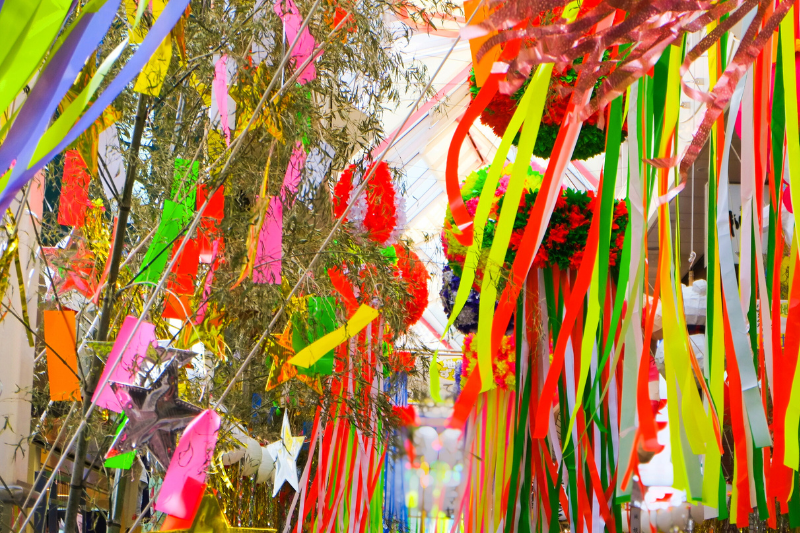
During Tanabata, people decorate bamboo branches with various ornaments and their written wishes.
Bamboo has long been considered sacred in Japan.
It was believed to have purifying and protective powers, and because it grows tall and straight, people thought that wishes hung on bamboo would “reach the heavens more quickly.”
This belief led to bamboo becoming an essential part of Tanabata decorations.
The Colors and Meanings of Tanzaku (Wish Strips)
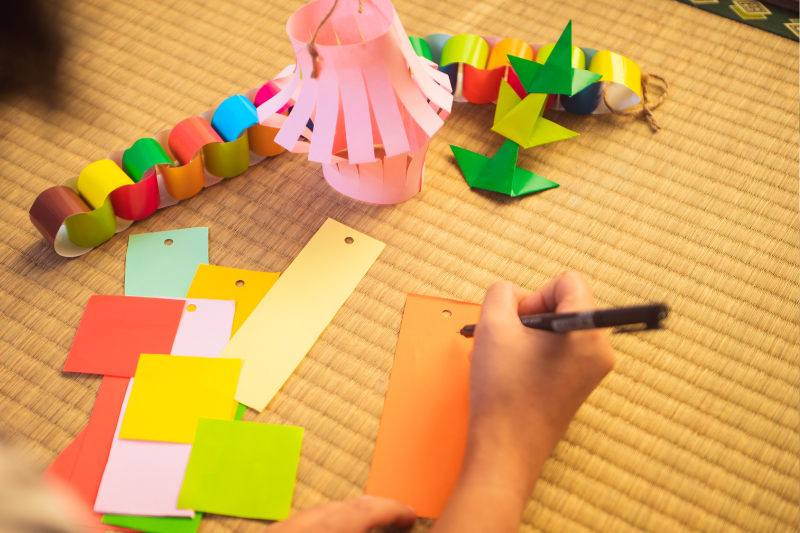
Tanzaku are traditionally made in five colors, each carrying its own meaning.
- Blue (Green) – Growth, effort, virtue
- Red – Family health, gratitude to ancestors
- Yellow – Harmony in relationships, trust, kindness
- White – Keeping promises and responsibilities
- Black (Purple) – Academic improvement, knowledge, wisdom
Today, people often choose any color they like, but selecting a color that matches your wish can make the experience feel even more special.
Types of Tanabata Decorations and Their Meanings
Tanabata ornaments are usually handmade from origami or colored paper, each carrying a symbolic wish.
Here are some of the most common Tanabata decorations.
- Cranes – Longevity
- Streamers – Improvement in weaving and craftsmanship
- Nets – Good harvests, prosperity, catching happiness
- Pouches – Wealth and good fortune
- Paper chains – Bonds and connections
- Kamigoromo(Paper kimono) – Protection from misfortune, having enough clothing
- Lanterns – Lighting the way for wishes and hearts
There are many other ornaments as well, each with its own meaning.
They are attached to the bamboo using koyori, thin twisted strips of Japanese paper.
Tanabata Foods
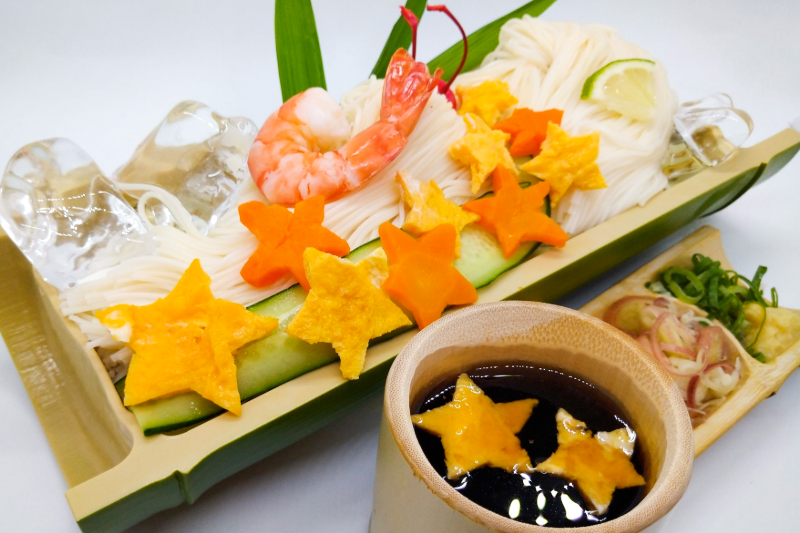
Somen noodles are the classic dish enjoyed during Tanabata, and they remain a beloved summer tradition in many households today.
One theory traces this custom back to the Chinese sweet sakubei, a long, thin pastry.
Because long foods symbolized longevity and good fortune, somen eventually became associated with Tanabata in Japan.
The thin, white noodles are also said to resemble the Milky Way.
Adding star‑shaped vegetables creates a festive and colorful dish that perfectly captures the spirit of the holiday.
It looks charming on the table and brings a bright, cheerful touch to your meal.
Summer vegetables help cool the body, and the light seasoning makes somen a refreshing dish that’s perfect for the hot season.
Orihime and Hikoboshi
Tanabata is also known for the beautiful legend of Orihime and Hikoboshi.
This story is connected to the ancient Chinese tradition Kikkōden, and it has been cherished in Japan for many generations.
Here is a simple summary of the tale.

Orihime, a weaver in the western sky, and Hikoboshi, a cowherd in the eastern sky, once lived far apart.
The two fell in love and married, and for a while they lived happily together.
However, they became so absorbed in their love that they began to neglect their work.
Seeing this, the heavenly emperor—Orihime’s father—separated them across the Milky Way and forbade them from meeting.
Still, if they worked diligently, they were allowed to meet once a year, on the night of Tanabata.
On that night, magpies formed a bridge with their wings across the Milky Way,allowing the two lovers, who lived apart, to finally reunite.
It is a gentle and slightly bittersweet story.
The two characters in this tale are represented in the night sky as the stars Vega (Orihime) and Altair (Hikoboshi), and they are well known as symbols of summer.
Knowing this story makes Tanabata feel even more special.
Summary
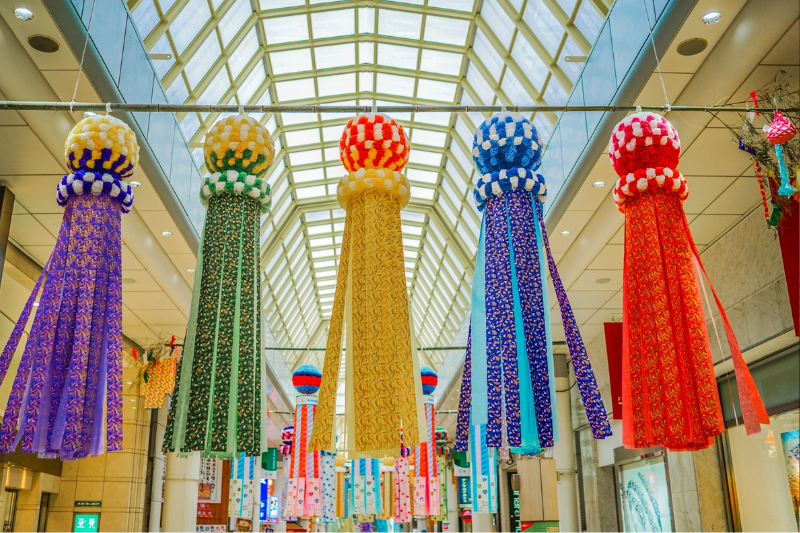
How was it?
The colorful Tanabata decorations swaying gently in the early summer breeze bring a quiet sense of beauty and mark the arrival of the season.
Sharing wishes and goals with someone important to you can turn an ordinary meal into a special moment.
Enjoy somen and other seasonal dishes, and spend a calm, relaxing Tanabata night.


コメント