
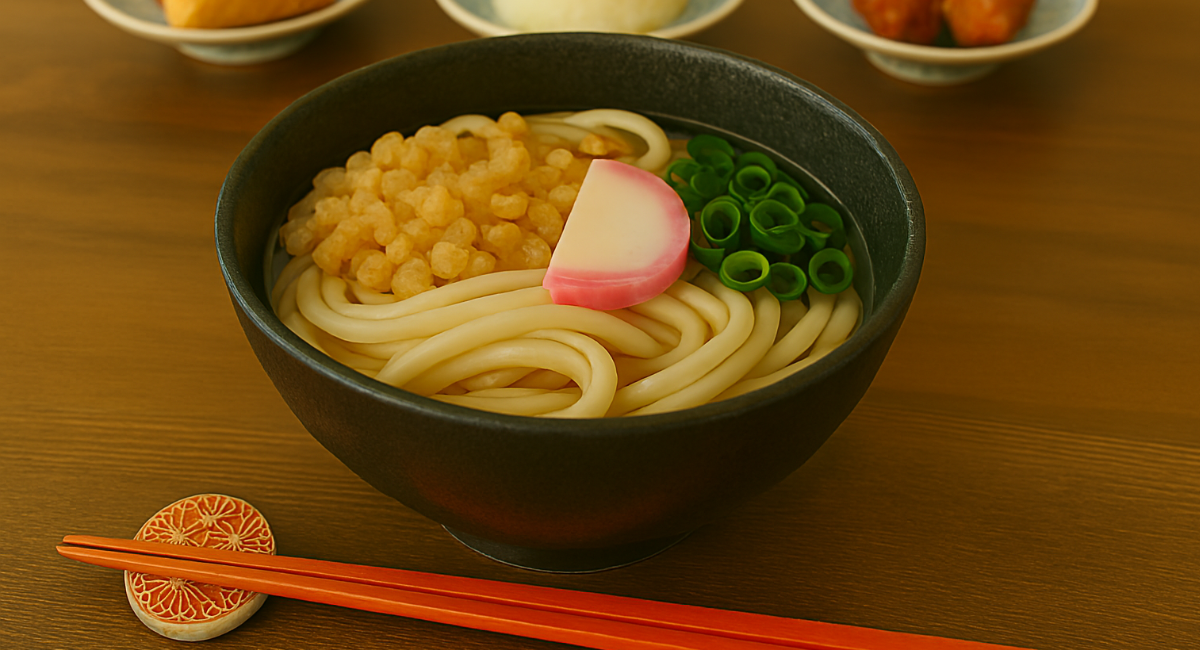
Udon: A Taste of Everyday Japan
In Japan, udon is a familiar comfort food enjoyed both at home and when eating out.
It’s the kind of dish people naturally choose on a busy day or when they want something warm and easy, saying, “Let’s just have udon tonight.”
It’s affordable, gentle on the stomach, and loved by children and adults alike. Even today, udon remains a beloved part of everyday Japanese life.
What is Udon?
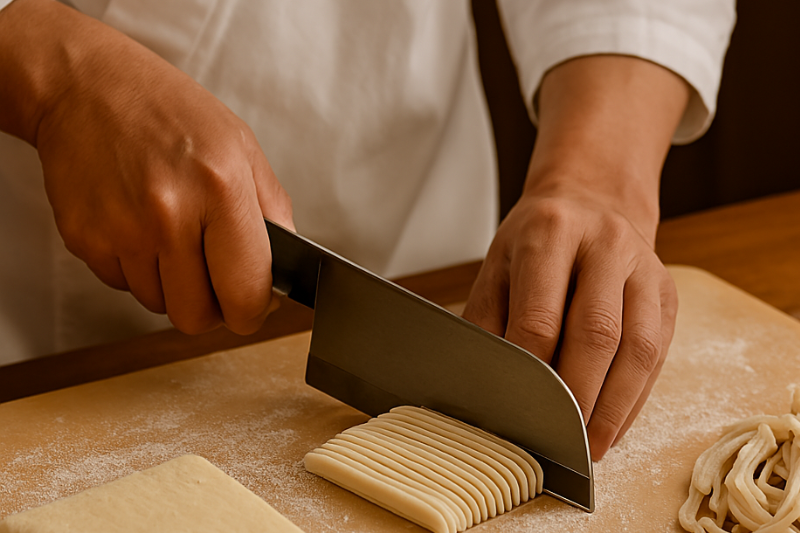
Udon is a traditional Japanese noodle made from wheat flour, salt, and water.
Its thick, soft texture varies widely depending on the region, giving each area its own unique style.
You’ll find udon everywhere—at home, in school lunches, at train‑station stands, and in specialty restaurants.
It’s truly a “daily taste” of Japan.
Compared to many overseas noodle dishes, udon is seasoned very simply.
The focus is on the aroma of dashi, a broth made from natural ingredients, and the gentle flavor of the noodles themselves.
In Fukuoka, the noodles are famously soft, and the broth is made from kombu and dried sardines, giving it a mild, comforting taste.
This “soft‑noodle culture” often surprises visitors, but for locals, it’s a nostalgic flavor.
Warm udon is the most common style, but cold dishes like zaru udon and bukkake udon are also popular.
There are many variations, such as yaki‑udon (stir‑fried udon) and miso‑nikomi udon (udon simmered in miso broth).
Regional Differences
Udon changes dramatically depending on the region:
- Fukuoka: Thick, very soft noodles with a mild, slightly sweet broth
- Kagawa (Sanuki): Firm, chewy noodles with a strong “koshi” (bite)
- Akita (Inaniwa): Thin, smooth dried noodles, bundled like somen
Even though they’re all called “udon,” each region has its own personality.
There are still many lesser‑known styles across Japan waiting to be discovered.
Fukuoka’s Popular Udon Chains
Fukuoka has many casual udon shops, including:
- West
- Sukesan Udon
- Makino Udon
- Uchidaya
- Marugame Seimen
You can even find udon at conveyor‑belt sushi restaurants and family diners— a very Fukuoka‑like convenience.
Some shops let you choose your own toppings, and seating styles vary from standing counters to tatami rooms.
Most places also serve soba and rice bowls alongside udon.
Udon at Home
In Japanese households, udon is an everyday meal.
It’s often served on busy evenings or when someone is recovering from an illness.
Here are the types commonly used at home:
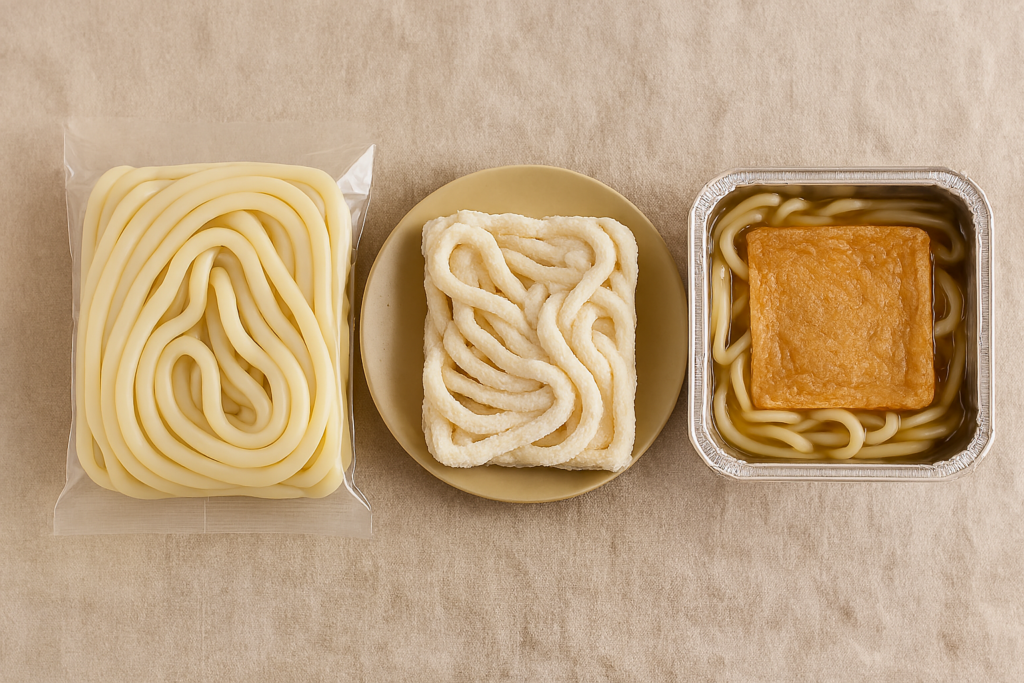
Fresh Udon (Chilled)
Fresh udon sold in the refrigerated section of supermarkets is very affordable, usually around 20–30 yen per serving (about 100 g).
This is the type we buy most often at home.
Because the shelf life is short, I usually freeze it to keep it longer.
It’s also a convenient option for hot‑pot dishes such as udon‑suki or yose‑nabe.
Some packages come with dashi soup included, and others contain three servings in one pack.
Frozen Udon
The most popular type in Japanese homes.
It heats up quickly in the microwave, has a firm texture, and is easy to keep in stock.
You can often find it in Asian supermarkets overseas.
Instant Udon (Cup or Aluminum Bowl)
Just add hot water.
Broth flavors vary by region—stronger in eastern Japan, lighter in western Japan.
Toppings like meat, fried tofu, and tempura make it fun and affordable.
There is also a type that comes in a square aluminum container, which can be heated directly over a stove flame.
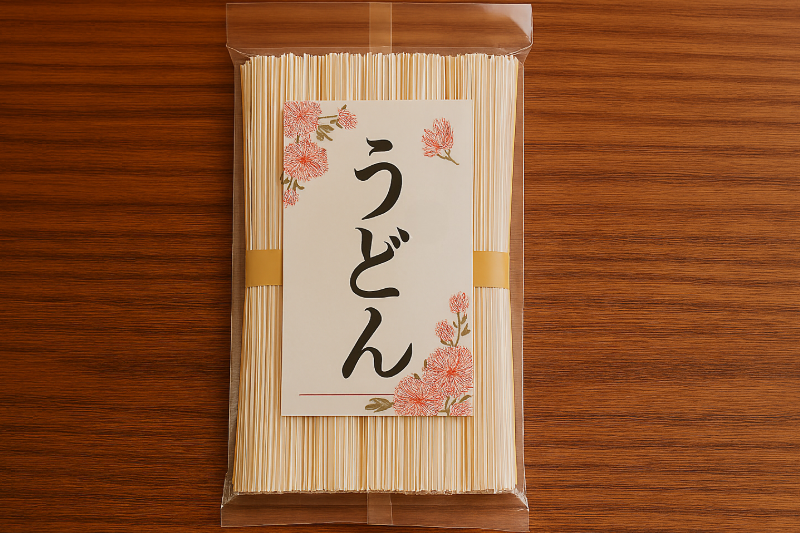
Dried Udon
A long‑lasting pantry staple.
It’s slightly thinner, takes longer to boil, and has a smooth, firm texture.
Some regions, like Akita’s Inaniwa udon, preserve traditional drying methods.
Lightweight and durable, dried udon makes a great souvenir.
Classic Toppings
- Green onions
- Wakame seaweed
- Kamaboko (fish cake)
- Tempura flakes (tanuki udon)
- Fried tofu (kitsune udon)
- Soft‑boiled or raw egg (tsukimi udon)
Fukuoka‑Style Toppings
- Burdock tempura (gobo‑ten)
- Round fish‑cake tempura (maru‑ten)
- Sweet simmered beef for niku udon
- Shrimp tempura
Common Home Toppings
- Frozen vegetables (green onions, corn)
- Wakame seaweed
- Tempura flakes
- Fried tofu (kitsune‑age)
- Shichimi chili pepper
Dashi & Soup Base
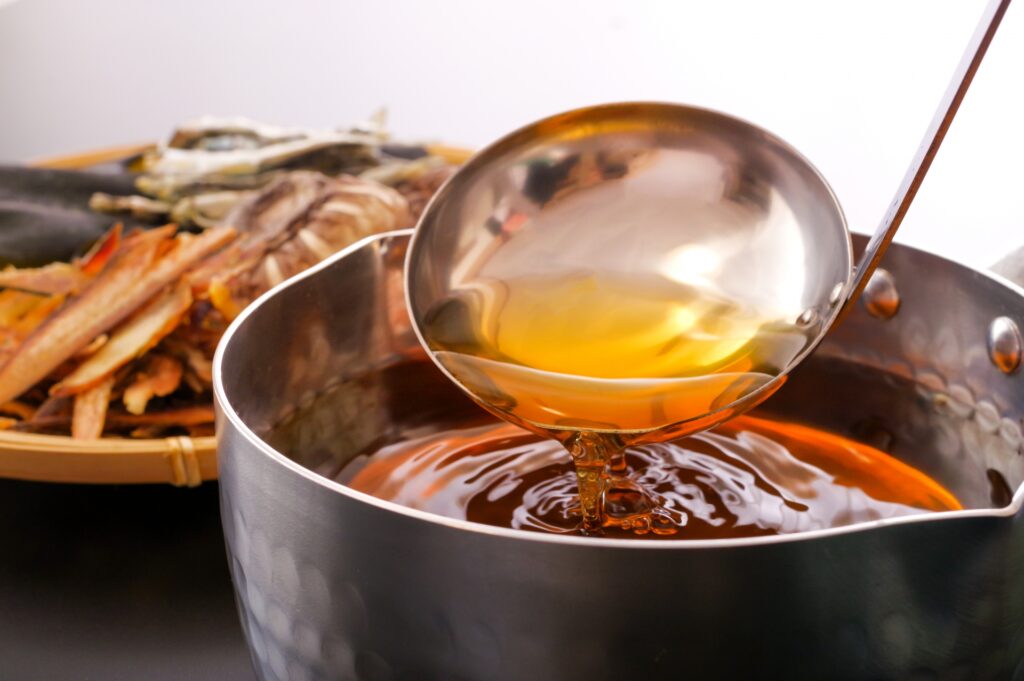
There are many types of dashi and noodle soup bases, including bottled, single‑serve packets, and powdered versions.
For hot udon, people usually use a gentle, golden broth.
For cold dishes like zaru udon, a stronger soy‑based dipping sauce (mentsuyu) is common.
You can find these in every supermarket in Japan.
How to Eat Udon (Manners)
It’s perfectly okay to slurp your noodles in Japan.
In fact, udon is meant to be slurped rather than bitten through.
Because it’s hot, lifting the noodles with your chopsticks for a moment helps them cool before eating.
You don’t have to drink all the leftover broth—most people leave it behind.
Summary
Fukuoka is famous for ramen, but it’s also a true “udon prefecture,” with a deep and beloved noodle culture.
For locals, udon isn’t a special‑occasion dish—it’s a warm, familiar presence in everyday life.
There’s even a popular TV segment called Udon MAP, where hosts visit and introduce udon shops around the city, showing just how loved this dish is.
Japan also has noodles similar to udon, such as hiyamugi and somen. Each has its own character, and people enjoy choosing different noodles depending on the season or their mood.
Finding your own favorite style of udon—or your favorite flavor of dashi—can be a wonderful way to experience Japanese food culture.


コメント